The opportunity to gain more surgical experience as a facial plastics fellow was enticing to Hussein Samji, MD, MPH, as he finished his residency at Stanford University School of Medicine in Palo Alto, Calif., in 2010. But after exposure to some of the more mundane aspects of the subspecialty during screening interviews, Dr. Samji said he knew it wasn’t the career path for him.
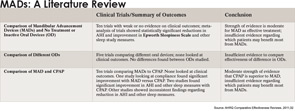
Obstructive Sleep Apnea Options
Oral appliances may work better than CPAP for some patients

Lift Off: A carefully planned retreat can take your practice to the next level
Every otolaryngology group needs a chance to evaluate its organization outside the frenetic pace of day-to-day patient care. A practice retreat provides the opportunity to assess your operations, examine your mission and conduct strategic planning in a setting where physicians are relaxed and undistracted.

Conflicting Curriculums: Ethics education for residents inconsistent across programs
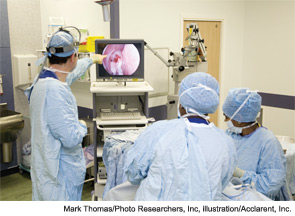
Balloon Sinuplasty Use Continues to Evolve: Procedure may complement traditional sinus surgery
Six years after balloon sinuplasty was introduced to the otolaryngology community, it remains an evolving technology. “In my opinion, balloon dilatation has great potential, but it’s still trying to find its proper place in the ENT arena,” said Ralph Metson, MD, clinical professor of otology and laryngology at Harvard Medical School and Massachusetts Eye and Ear Infirmary in Boston.
Interested in a Policy Career? Four programs to get you into the Beltway and beyond
Otolaryngologists with a desire to broaden their careers beyond traditional medical practice have several options. Programs exist that can open doors into medical leadership, health policy work, clinical and outcomes research and public office. Opportunities are available at all stages of a physician’s career. Here’s a look at a handful of programs that aim to provide physicians with the tools they need to take their careers in a new direction.

New Ventures, New Risks: Review all possibilities before affiliating with a hospital
In my January 2011 column (“A Seller’s Market: How to prepare your practice for sale to a hospital”), I described the growing trend of physicians selling their practices to hospitals and large health systems and then working for the hospital or health system. This trend is expected to continue in full force through 2012. As I noted in my January article, the physician’s post-sale arrangement is the driver for the growth of the physician’s practice within the hospital or health system.
Geriatric Challenges: Age shouldn’t determine treatment, experts say
One of William Dale’s healthiest patients was working out three times a week, regularly walking two miles, lifting weights, maintaining a stable body weight of 120 pounds and not on any medications when she was diagnosed with a stage IV ovarian cancer. Dale, MD, PhD, section chief of geriatrics and palliative medicine at the University of Chicago, said the patient did fine with both surgery and chemotherapy. The fact that she was 89 years old, he said, shouldn’t necessarily come as a surprise.

Resident Tips: Private and academic practitioners offer career advice
For residents embarking on their professional careers or physicians changing a career, navigating the many issues involved in making a decision that will significantly affect both their professional and personal lives can be daunting and challenging. To provide some guidance, practicing physicians with many years of experience in their respective careers discussed these issues during a session held here Sept. 13 at the 2011 American Academy of Otolaryngology–Head and Neck Surgery (AAO-HNS) Annual Meeting.

A Boost for Research: The Triological Society’s grants help physician-scientists launch investigative careers
It can be difficult to launch a career as a physician–scientist, especially when budget cuts are making research funding harder to find—and this is doubly true for a small specialty like otolaryngology. That challenge is the reasoning behind the Triological Society’s grant programs. The society, which has awarded more than $2.5 million in grants since 1994, promotes research into the causes and treatments of ear, nose and throat diseases.
- « Previous Page
- 1
- …
- 53
- 54
- 55
- 56
- 57
- …
- 88
- Next Page »