• Home
  • Practice Focus
    • Facial Plastic/Reconstructive
    • Head and Neck
    • Laryngology
    • Otology/Neurotology
    • Pediatric
    • Rhinology
    • Sleep Medicine
    • How I Do It
    • TRIO Best Practices
  • Business of Medicine
    • Health Policy
    • Legal Matters
    • Practice Management
    • Tech Talk
    • AI
  • Literature Reviews
    • Facial Plastic/Reconstructive
    • Head and Neck
    • Laryngology
    • Otology/Neurotology
    • Pediatric
    • Rhinology
    • Sleep Medicine
  • Career
    • Medical Education
    • Professional Development
    • Resident Focus
  • ENT Perspectives
    • ENT Expressions
    • Everyday Ethics
    • From TRIO
    • The Great Debate
    • Letter From the Editor
    • Rx: Wellness
    • The Voice
    • Viewpoint
  • TRIO Resources
    • Triological Society
    • The Laryngoscope
    • Laryngoscope Investigative Otolaryngology
    • TRIO Combined Sections Meetings
    • COSM
    • Related Otolaryngology Events
  • Search
  • Health Policy
  • Legal Matters
  • Practice Management
  • Tech Talk
  • AI

Business of Medicine » Practice Management

New Ways to Deliver Care: The Center for Medicare and Medicaid Innovation promises cost-cutting ideas

February 28, 2011

One of the most common criticisms of the 2010 health care reform law is that it doesn’t do enough to reduce health care costs. Richard Gilfillan, MD, however, begs to differ.

Pages: 1 2 3 | Multi-Page

Purchase Options: Review these ownership provisions before signing your employment agreement

February 28, 2011

Physicians who join a medical practice often have the opportunity to purchase an equity interest in the practice after some period of employment with the group, an issue that is usually addressed in the physician’s employment agreement. If you think you may be interested in such a partnership, you should carefully review your employment agreement before signing it. The amount of detail in the employment agreement regarding potential ownership will vary depending on the practice and the negotiating power of the individual physician. Clearly, the more specificity found in the contract, the better you will be served.

Pages: 1 2 3 | Multi-Page

Imaging at a Crossroads: CT scan providers urged to initiate accreditation

February 28, 2011

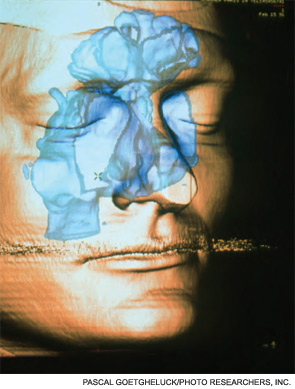
Otolaryngologists who provide computed tomography (CT) imaging are being urged to apply before summer to ensure their compliance with the 2008 Medicare Improvements for Patients and Providers Act (MIPPA) accreditation requirement.

Pages: 1 2 3 4 5 | Multi-Page

Otolaryngologist Pioneers New Practice Model: Dr. Russell heralds hospitalist role as others ponder the concept’s staying power

February 28, 2011

On July 1, after five years in the department of otolaryngology-head and neck surgery at the University of California, San Francisco (UCSF) Medical Center, most recently as chief resident, Matthew Russell, MD, is joining the faculty there as an assistant professor. Normally, that career arc is not nationally noteworthy.

Pages: 1 2 3 4 | Multi-Page

Treatment Options: Study reports neck dissection effective in patients with residual disease

February 7, 2011

Patients who had residual neck disease after treatment for a primary head and neck squamous carcinoma and then underwent neck dissection had comparable survival rates to those who had their disease resolved after their initial chemotherapy and radiation treatment, according to a retrospective analysis from researchers at the University of Louisville in Kentucky presented here Jan. 27.

Pages: 1 2 3 | Multi-Page

Lessons Learned: How to overcome the cultural barriers to EMR implementation

February 7, 2011

Health care reform and government incentives have intensified the dialogue on electronic medical records (EMR). Despite the financial incentives for EMR adoption included in the Health Information Technology for Economic and Clinical Health (HITECH) Act, enacted as part of the American Recovery and Reinvestment Act of 2009, physician response remains lukewarm. The HITECH incentives program fails to recognize that the greatest barrier to EMR adoption is not financial, but cultural.

Pages: 1 2 3 4 | Multi-Page

Physician Groups Set 2011 Agenda: Medicare payment reform tops the list

January 10, 2011

Physician groups representing otolaryngologists have ambitious 2011 policy and legislative agendas that include pushing for replacement of the Medicare physician payment formula and helping to shape health reform’s implementation.

Pages: 1 2 3 4 | Multi-Page

A Seller’s Market: How to prepare your practice for sale to a hospital

January 10, 2011

It’s 2011 and the pendulum is once again moving toward private practices selling to hospitals or affiliated foundations. Several years ago, the same phenomenon drove the medical market. Management companies and hospitals went on an acquisition frenzy, purchasing practices at breakneck speed. Soon, hospitals were dissatisfied, management companies went broke and physician practices went private again. Physicians simply proved to be less motivated and productive when employed by hospitals or affiliated with management companies.

Pages: 1 2 | Multi-Page

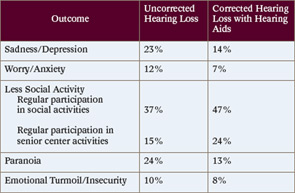
Falling on Deaf Ears: Hearing loss in older adults may be an undertreated condition

January 10, 2011

Most people will experience some degree of hearing loss as they age. Statistics from the National Institute on Deafness and Other Communication Disorders at the National institutes of Health (NIH) indicate that 30 percent of adults ages 65 to 74, and 47 percent of adults 75 years or older, have hearing loss.

Pages: 1 2 3 4 5 | Multi-Page

New Frontiers: Medical tourism brings potential for big business but poses big questions

January 10, 2011

More patients every year are traveling outside of the U.S. in search of lower health bills and treatments that might be unavailable to them at home.

Pages: 1 2 3 4 5 6 | Multi-Page
  • « Previous Page
  • 1
  • …
  • 10
  • 11
  • 12
  • 13
  • 14
  • …
  • 27
  • Next Page »

The Triological SocietyENTtoday is a publication of The Triological Society.

Polls

Do you use TXA to reduce intraoperative and post-op bleeding?

View Results

Loading ... Loading ...
  • Polls Archive

Top Articles for Residents

  • A Resident’s View of AI in Otolaryngology
  • Call for Resident Bowl Questions
  • Resident Pearls: Pediatric Otolaryngologists Share Tips for Safer, Smarter Tonsillectomies
  • A Letter to My Younger Self: Making Deliberate Changes Can Help Improve the Sense of Belonging
  • ENTtoday Welcomes Resident Editorial Board Members
  • Popular this Week
  • Most Popular
  • Most Recent
    • Office Laryngoscopy Is Not Aerosol Generating When Evaluated by Optical Particle Sizer

    • Call for Resident Bowl Questions

    • The Dramatic Rise in Tongue Tie and Lip Tie Treatment

    • Empty Nose Syndrome: Physiological, Psychological, or Perhaps a Little of Both?

    • Ethical Obligations and Duty to Advocate for Patients in Prior Authorization for Surgery

    • The Dramatic Rise in Tongue Tie and Lip Tie Treatment

    • Rating Laryngopharyngeal Reflux Severity: How Do Two Common Instruments Compare?

    • Is Middle Ear Pressure Affected by Continuous Positive Airway Pressure Use?

    • Otolaryngologists Are Still Debating the Effectiveness of Tongue Tie Treatment

    • Keeping Watch for Skin Cancers on the Head and Neck

    • Growing Use of Tranexamic Acid in Otolaryngology
    • Reconnect, Recharge, Relax, and Choose Joy This Season
    • A Resident’s View of AI in Otolaryngology
    • Faculty Mentorship of Academic Surgeons
    • CMS’ New Rule Aims to Streamline the Prior Authorization Process

Follow Us

  • Contact Us
  • About Us
  • Advertise
  • The Triological Society
  • The Laryngoscope
  • Laryngoscope Investigative Otolaryngology
  • Privacy Policy
  • Terms of Use
  • Cookies

Wiley

Copyright © 2025 by John Wiley & Sons, Inc. All rights reserved, including rights for text and data mining and training of artificial technologies or similar technologies. ISSN 1559-4939