One of William Dale’s healthiest patients was working out three times a week, regularly walking two miles, lifting weights, maintaining a stable body weight of 120 pounds and not on any medications when she was diagnosed with a stage IV ovarian cancer. Dale, MD, PhD, section chief of geriatrics and palliative medicine at the University of Chicago, said the patient did fine with both surgery and chemotherapy. The fact that she was 89 years old, he said, shouldn’t necessarily come as a surprise.
Reducing Patient Wait Times: Examine your operations to boost efficiency
Here’s a telling statistic: The average time patients wait in an office to see an otolaryngologist is 24 minutes, according to Press Ganey Associates, Inc., a South Bend, Ind., health care performance measurement and improvement firm. If that doesn’t sound bad, or if you think your practice exceeds that benchmark, consider that otolaryngology ranked 19th in overall satisfaction among 25 medical specialties measured in Press Ganey’s 2010 Medical Practice Pulse Report.

Face Time: Ask the right questions when meeting with EMR vendors
In my last column (ENT Today, August 2011), I explained some of the broader issues regarding electronic medical records/electronic health records (EMR/EHR) selection, centered around the understanding that an EMR is a record that is more practice centered while an EHR is a health record intended to follow the patient through multiple providers. This article is directed toward practices with a large degree of autonomy in selecting their products; therefore, we will be discussing EMRs. If you’re part of a multidisciplinary practice or a university, you likely had little to no input regarding the EHR chosen. This is because larger numbers like primary care drive EHR selection. Don’t stop reading, however; assessment of disease-specific pathways is still applicable for the EHR you have.

Resident Tips: Private and academic practitioners offer career advice
For residents embarking on their professional careers or physicians changing a career, navigating the many issues involved in making a decision that will significantly affect both their professional and personal lives can be daunting and challenging. To provide some guidance, practicing physicians with many years of experience in their respective careers discussed these issues during a session held here Sept. 13 at the 2011 American Academy of Otolaryngology–Head and Neck Surgery (AAO-HNS) Annual Meeting.

Corticosteroid Confusion: Evidence lacking for most conditions, panelists say
Although steroids are widely used to treat a variety of otolaryngologic conditions, the short- and long-term side effects remain a concern and fuel the need to better understand their proper role. Contributing to the ongoing controversy over their use are gaps in the evidence, panelists said here Sept. 12 at the American Academy of Otolaryngology-Head and Neck Surgery Annual Meeting.
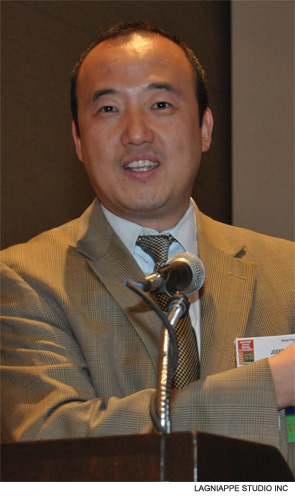
Biofilms in Otolaryngology: Relation to clinical disease needs more study, experts say
It is now well recognized that pathogens found in biofilms play a role in many mucosal-based otolaryngologic-related infections, but what that role is and how to prevent or treat biofilms remain unknown, concluded a panel of experts convened here on Sept. 17 at the 2011 American Academy of Otolaryngology-Head and Neck Surgery Annual Meeting.
Payment Shifts: Expect reimbursement structure changes ahead, policy experts say
Although the new U.S. health care law does not specifically alter the current fee-for-service payment structure, changes to how physicians and hospitals will be reimbursed for services are under construction. These changes are reflected by the growing focus on the development and implementation of quality improvement and physician and institutional performance measures on which reimbursement will increasingly be made, panelists said here on Sept. 11 at the 2011 American Academy of Otolaryngology-Head and Neck Surgery (AAO-HNS) Annual Meeting.
The Role of Balloon Catheter Sinuplasty in Pediatric Sinus Disease
What is the role of balloon catheter sinuplasty (BCS) in the surgical management of pediatric sinus disease? Background: Adenoidectomy and functional endoscopic sinus surgery have traditionally comprised the surgical management of […]
Optimal Timing of Surgical Intervention Following Laryngeal Trauma
What is the optimal timing of surgical intervention following adult laryngeal trauma? Background: Airway management is paramount in cases of adult laryngeal trauma. Even with a secured airway, however, laryngeal lacerations […]
Both Endoscopic and External Approaches Needed for ZD
Is the transcervical approach indicated in the treatment of Zenker’s diverticulum (ZD) and, if so, to what extent? Background: According to the literature, the only existing curative approach to ZD is […]
- « Previous Page
- 1
- …
- 274
- 275
- 276
- 277
- 278
- …
- 346
- Next Page »