• Home
  • Practice Focus
    • Facial Plastic/Reconstructive
    • Head and Neck
    • Laryngology
    • Otology/Neurotology
    • Pediatric
    • Rhinology
    • Sleep Medicine
    • How I Do It
    • TRIO Best Practices
  • Business of Medicine
    • Health Policy
    • Legal Matters
    • Practice Management
    • Tech Talk
    • AI
  • Literature Reviews
    • Facial Plastic/Reconstructive
    • Head and Neck
    • Laryngology
    • Otology/Neurotology
    • Pediatric
    • Rhinology
    • Sleep Medicine
  • Career
    • Medical Education
    • Professional Development
    • Resident Focus
  • ENT Perspectives
    • ENT Expressions
    • Everyday Ethics
    • From TRIO
    • The Great Debate
    • Letter From the Editor
    • Rx: Wellness
    • The Voice
    • Viewpoint
  • TRIO Resources
    • Triological Society
    • The Laryngoscope
    • Laryngoscope Investigative Otolaryngology
    • TRIO Combined Sections Meetings
    • COSM
    • Related Otolaryngology Events
  • Search

Departments

Research Advocate: Through the Looking Glass to the Future

January 1, 2009

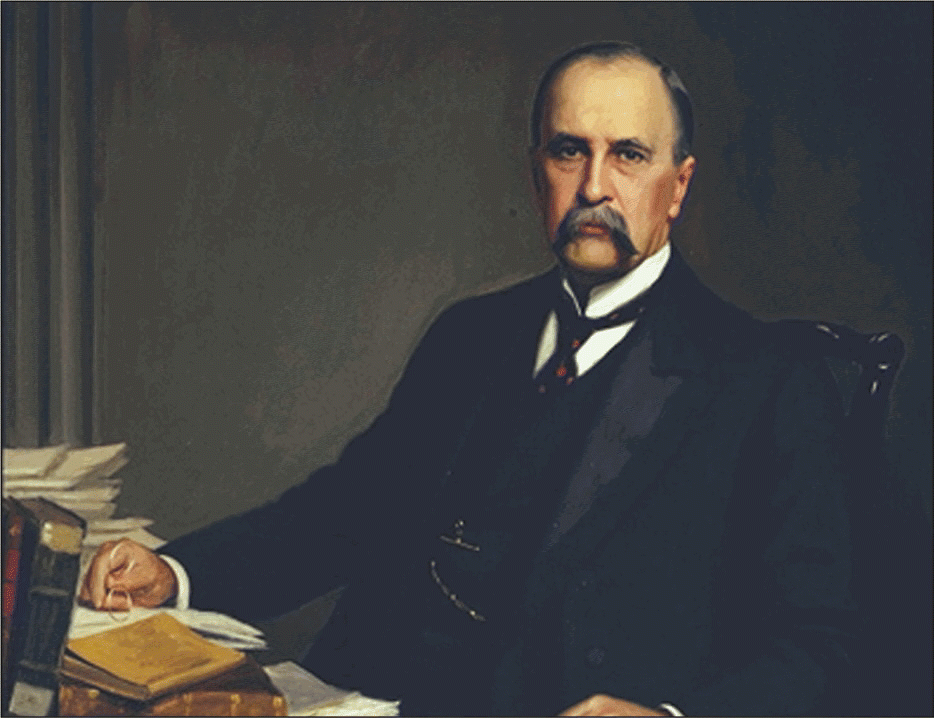
Sir William Osler’s image of the future would have been very different from the one that we accept as ordinary today.

Pages: 1 2 3 4 5 | Single Page

Autism Spectrum Disorders: What Can Otolaryngologists Do?

December 1, 2008

Part 2 of 2 articles

Pages: 1 2 3 4 5 | Single Page

Developing Quality Measures in Otolaryngology-Head and Neck Surgery

December 1, 2008

A movement underfoot in industry is rapidly infiltrating all branches of medicine, and specialties, such as otolaryngology-head and neck surgery, are being encouraged to join the ranks.

Pages: 1 2 3 4 5 6 | Single Page

Narrow-Band Imaging Helps Diagnose Barrett’s Esophagus, Study Shows

December 1, 2008

Patients who undergo a transnasal esophagoscopy using narrow-band imaging are more likely to have dysplasia diagnosed with a biopsy than those who have the exam using only white light, researchers have reported.

Pages: 1 2 | Single Page

Quality Improvement: We Are Not Alone

December 1, 2008

This issue’s Special Report is on quality improvement, an increasingly important health care issue not only in this country, but also in many other countries around the world.

Pages: 1 2 3 | Single Page

Recognizing Diversity is Essential for Delivering Quality, Affordable Health Care

December 1, 2008

Within the ongoing discussion on the need to reform the delivery of health care in the United States to better balance issues of cost, quality, and accessibility is an underlying issue that, if not sufficiently recognized, will undermine all efforts at reform.

Pages: 1 2 3 4 | Single Page

When Leaders Ail: Health Problems of Past Presidents and What They Tell Us

December 1, 2008

As this article is being written, the presidential campaign is in the final heat, and all eyes are turning toward the finish line.

Pages: 1 2 3 4 | Single Page

Cellular Therapy of Autoimmune Disease

November 1, 2008

Cellular therapy refers to the use of live cells to replace or repair a damaged organ system. The first widespread use of this approach occurred more than 50 years ago when hematopoietic stem cells (HSCs) from the bone marrow of a healthy donor (allogeneic) were used to replace the hematopoietic system of a recipient after it was ablated during chemo/radio therapy of leukemia, the recipient’s hematopoietic system being “collateral damage” during the eradication of the unwanted leukemia cells.

Pages: 1 2 3 4 5 6 7 8 | Single Page

Innovative Doctors + Better Technology = Practice Changess

November 1, 2008

Part 1 of a series

Pages: 1 2 3 4 | Single Page

Salivary Gland Malignancies: Diagnosis and Treatment of a Rare and Challenging Cancer

November 1, 2008

Salivary gland malignancies affect 2.5 to 3 in 100,000 people each year in the United States, and comprise only 6% of head and neck cancers.

Pages: 1 2 3 4 5 6 7 | Single Page
  • « Previous Page
  • 1
  • …
  • 65
  • 66
  • 67
  • 68
  • 69
  • …
  • 87
  • Next Page »

The Triological SocietyENTtoday is a publication of The Triological Society.

Polls

Do you use TXA to reduce intraoperative and post-op bleeding?

View Results

Loading ... Loading ...
  • Polls Archive

Top Articles for Residents

  • A Resident’s View of AI in Otolaryngology
  • Call for Resident Bowl Questions
  • Resident Pearls: Pediatric Otolaryngologists Share Tips for Safer, Smarter Tonsillectomies
  • A Letter to My Younger Self: Making Deliberate Changes Can Help Improve the Sense of Belonging
  • ENTtoday Welcomes Resident Editorial Board Members
  • Popular this Week
  • Most Popular
  • Most Recent
    • Office Laryngoscopy Is Not Aerosol Generating When Evaluated by Optical Particle Sizer

    • Empty Nose Syndrome: Physiological, Psychological, or Perhaps a Little of Both?

    • The Dramatic Rise in Tongue Tie and Lip Tie Treatment

    • Top 10 LARY and LIO Articles of 2024

    • History of the Cochlear Implant

    • The Dramatic Rise in Tongue Tie and Lip Tie Treatment

    • Rating Laryngopharyngeal Reflux Severity: How Do Two Common Instruments Compare?

    • Is Middle Ear Pressure Affected by Continuous Positive Airway Pressure Use?

    • Otolaryngologists Are Still Debating the Effectiveness of Tongue Tie Treatment

    • Keeping Watch for Skin Cancers on the Head and Neck

    • Growing Use of Tranexamic Acid in Otolaryngology
    • Reconnect, Recharge, Relax, and Choose Joy This Season
    • A Resident’s View of AI in Otolaryngology
    • Faculty Mentorship of Academic Surgeons
    • CMS’ New Rule Aims to Streamline the Prior Authorization Process

Follow Us

  • Contact Us
  • About Us
  • Advertise
  • The Triological Society
  • The Laryngoscope
  • Laryngoscope Investigative Otolaryngology
  • Privacy Policy
  • Terms of Use
  • Cookies

Wiley

Copyright © 2025 by John Wiley & Sons, Inc. All rights reserved, including rights for text and data mining and training of artificial technologies or similar technologies. ISSN 1559-4939