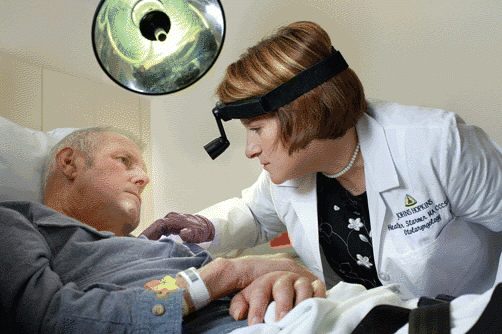
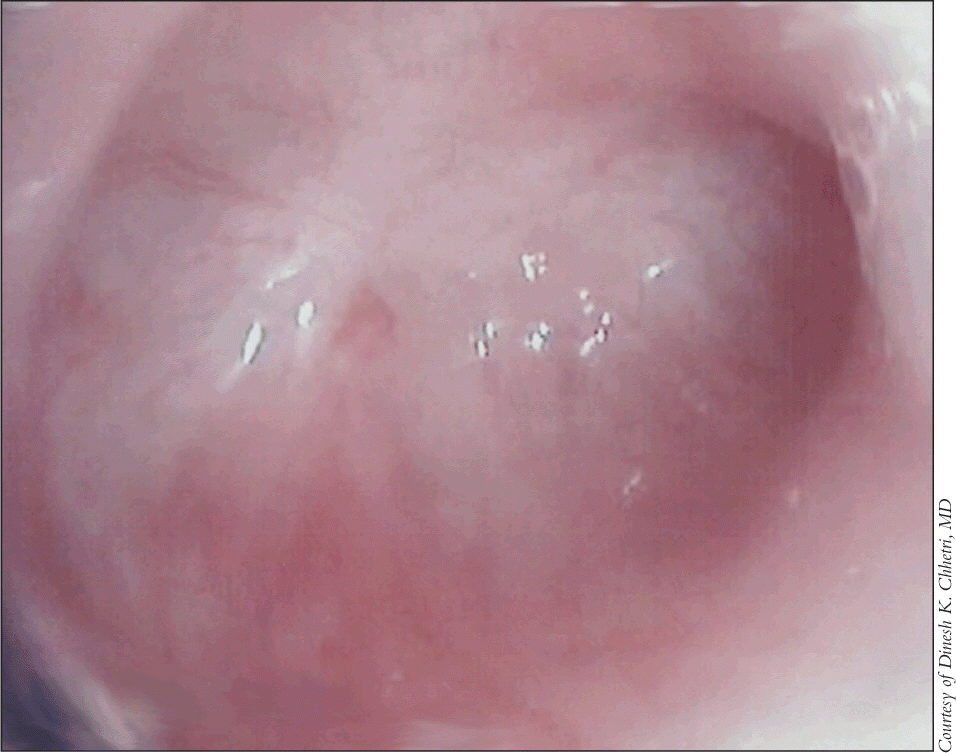
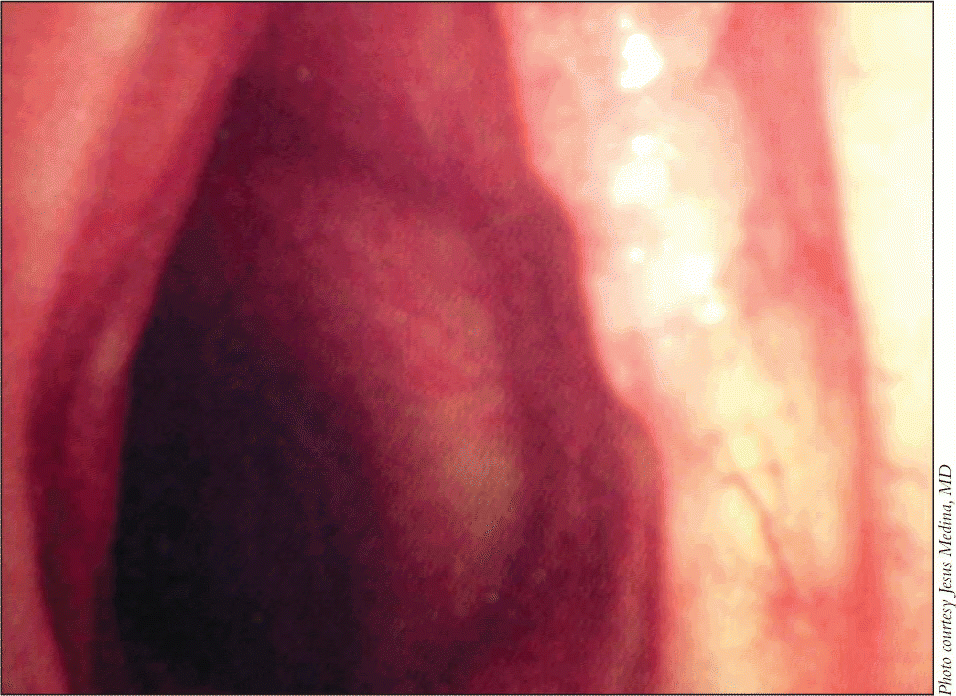
Laryngeal biopsies are being performed more commonly as in-office procedure. ENT Today asked two otolaryngologists about the ins and outs of performing the procedure in-office.


Laryngeal biopsies are being performed more commonly as in-office procedure. ENT Today asked two otolaryngologists about the ins and outs of performing the procedure in-office.

PHOENIX-Eosinophilic esophagitis is a serious, growing problem that is little understood by many otolaryngologists, according to panelists discussing the disease. Some doctors who specialize in swallowing disorders acknowledged that they were not even aware of the problem, let alone well versed in diagnosing and treating the illness, according to results of a survey completed by 80 members of the American Broncho-Esophagological Association (ABEA).


Lack of awareness surrounding exercise-induced paradoxical vocal fold movement (PVFM) as a cause of dyspnea may contribute to athletes being misdiagnosed and improperly treated.

Management of laryngeal cancer with a laser has grown from a treatment strategy once derided as malpractice to a cornerstone that has become replete with complex considerations for laryngeal surgeons, according to panelists who discussed the history and the future of the use of the laser to treat throat cancer.

Removal of the submandibular gland using an oral pathway appears to be feasible and successful, doctors have reported.
In this age of increasing reliance on diagnostic technologies to better see pathologies of the body, there is a confounding problem of seeing too much, with too little understanding of what one is seeing and whether what one sees poses a problem.


Sublingual immunotherapy (SLIT) is gaining acceptance in otolaryngology circles, but is it really any better than subcutaneous injections?