Treatment with the antiepileptic drug pregabalin (Lyrica) appears to relieve symptoms among patients with laryngeal sensory neuropathy, researchers reported at the 88th annual meeting of the American Broncho-Esophagological Association.

Laser, Radiotherapy Appear Similar in Oncologic Outcomes for Glottic Cancer
A meta-analysis of the literature suggests that oncologic and voice quality results are similar if patients with early-stage glottic cancer are treated with either transoral laser surgery or external beam radiotherapy.
Otolaryngologists at the Forefront for Early Detection of Autism Disorders

In-Office Laryngeal Procedures in Awake Patients a Viable, and Often Preferable, Option
With the advent of fiberoptic and distal-chip scopes and other innovations, otolaryngologists are now able to perform many laryngeal diagnostic and therapeutic procedures on awake patients in the in-office setting rather than on fully anesthetized individuals in the operating room.

Surgical Issues: Insights into UPPP, CPAP Use, and CSF Leaks
Does multilevel upper airway surgery preclude continuous positive airway pressure (CPAP) usage, and is there a best way to repair cerebrospinal fluid (CSF) leaks?

State of the Art in Tonsillectomy
Even though tonsillectomies are a commonly performed procedure, research continues to find out more about how to best do the surgery, as well as other values of the procedure.
Socioeconomic Disparities in Otolaryngology: No Easy Explanations, No Easy Answers

Laser Treatment Resolves Glottic Cancer in a Pilot Study
Laser involution of early stage glottic cancer-with complete treatment of the malignancy weeks after the first session-appears to offer long-term control of the disease while preserving excellent voice function, researchers reported at the 88th annual meeting of the American Broncho-Esophagological Association (ABEA).
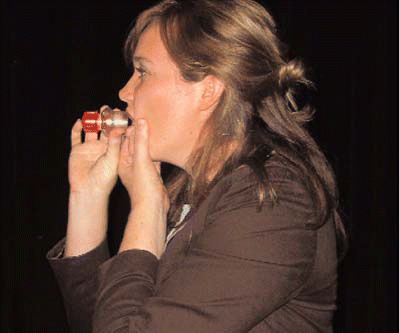
Hand-Held Device Improves Cough, Swallowing
A novel device that was developed to help improve cough in patients with Parkinson’s disease (PD) has an intriguing additional effect-it helps improve swallow function too.
Swallowing Patterns Differ Between Healthy Subjects and Patients with Sleep Apnea
Individuals identified with sleep apnea appear to have a different pattern of deglutition when they are sleeping than do healthy subjects, say researchers who specialize in swallowing studies.
- « Previous Page
- 1
- …
- 28
- 29
- 30
- 31
- 32
- …
- 34
- Next Page »