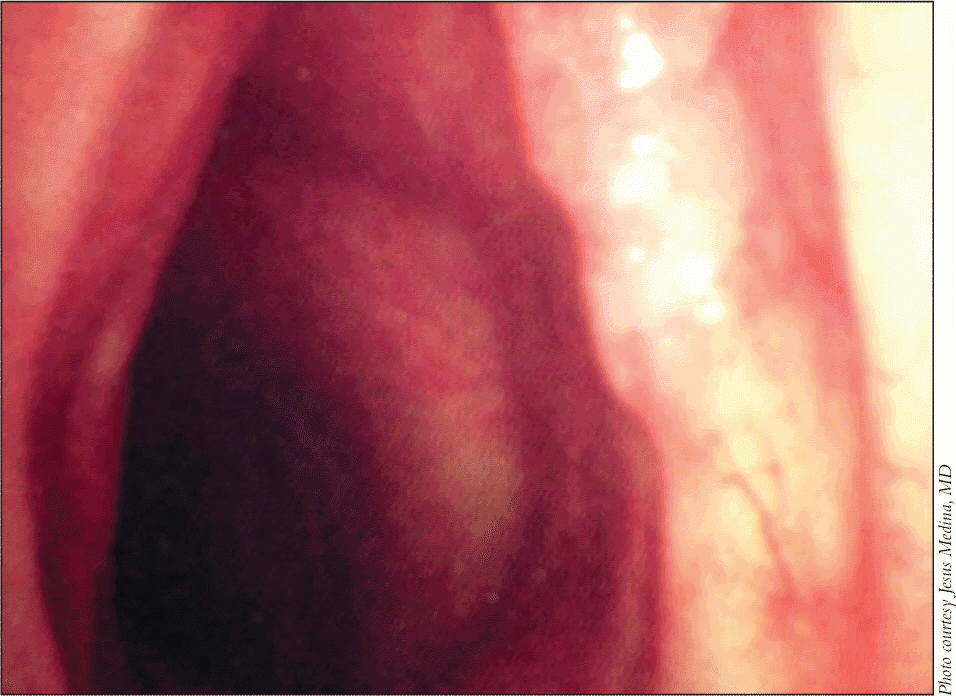
The choice with which laryngologists are faced when it comes to early vocal-fold cancer is a delicate one: How invasive does the treatment need to be at this stage?

Sublingual immunotherapy (SLIT) is gaining acceptance in otolaryngology circles, but is it really any better than subcutaneous injections?

Meaning disordered eating in Greek, dysphagia is typically translated in English to mean difficulty swallowing. Both phrases capture the profound affect that dysphagia can and does have on the many people afflicted by it.
Part 2 of a series

Roger L. Crumley, MD, MBA, Professor and former Chair of the Department of Otolaryngology-Head and Neck Surgery at the University of California, Irvine School of Medicine, and current President of the American Laryngological Association, has no doubts about the advantages of laryngeal reinnervation over other treatments for unilateral vocal cord paralysis.
As evidence accumulates on the benefits and added value of videostroboscopy in the diagnosis of voice problems, many otolaryngologists are turning their attention to whether or not they want to invest in this technology-in terms of both the cost in buying the equipment and the time and skill needed to analyze correctly the many types of lesions one can see using this tool.

Patients who undergo a transnasal esophagoscopy using narrow-band imaging are more likely to have dysplasia diagnosed with a biopsy than those who have the exam using only white light, researchers have reported.

As this article is being written, the presidential campaign is in the final heat, and all eyes are turning toward the finish line.

Patients who were allowed to test drive a vocal fold injection-and who later decided on a permanent augmentation-found that the trial treatment translated in positive outcomes, researchers have found.