• Home
  • Practice Focus
    • Facial Plastic/Reconstructive
    • Head and Neck
    • Laryngology
    • Otology/Neurotology
    • Pediatric
    • Rhinology
    • Sleep Medicine
    • How I Do It
    • TRIO Best Practices
  • Business of Medicine
    • Health Policy
    • Legal Matters
    • Practice Management
    • Tech Talk
    • AI
  • Literature Reviews
    • Facial Plastic/Reconstructive
    • Head and Neck
    • Laryngology
    • Otology/Neurotology
    • Pediatric
    • Rhinology
    • Sleep Medicine
  • Career
    • Medical Education
    • Professional Development
    • Resident Focus
  • ENT Perspectives
    • ENT Expressions
    • Everyday Ethics
    • From TRIO
    • The Great Debate
    • Letter From the Editor
    • Rx: Wellness
    • The Voice
    • Viewpoint
  • TRIO Resources
    • Triological Society
    • The Laryngoscope
    • Laryngoscope Investigative Otolaryngology
    • TRIO Combined Sections Meetings
    • COSM
    • Related Otolaryngology Events
  • Search
  • Facial Plastic/Reconstructive
  • Head and Neck
  • Laryngology
  • Otology/Neurotology
  • Pediatric
  • Rhinology
  • Sleep Medicine
  • How I Do It
  • TRIO Best Practices

Practice Focus » Rhinology

New Speech-Language Pathology Rule: Supervision of videostroboscopy and nasopharyngoscopy no longer required

September 2, 2011

Medicare requirements for physician supervision of speech-language pathologists conducting videostroboscopy (CPT 31579) and nasopharyngoscopy (CPT 92511) will move from the strictest level of oversight back to no national supervision level starting in October.

Pages: 1 2 3 | Multi-Page

Structural Support: Surgeons extol the cartilage stability provided by a new nasal implant

August 2, 2011

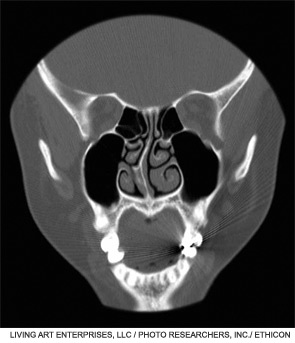
For patients who undergo septoplasty to repair a crooked septum, reconnecting pieces of cartilage and stabilizing the cartilage during the healing process is critical to achieving straight alignment of the nasal septum. Stabilizing cartilage is particularly challenging for patients who require correction of severe septal deviations or severe post-traumatic deformities that are often both functional and cosmetic.

Pages: 1 2 3 4 5 | Multi-Page

Baseball Foul Tip Causing Frontal Sinus Fracture

April 4, 2011

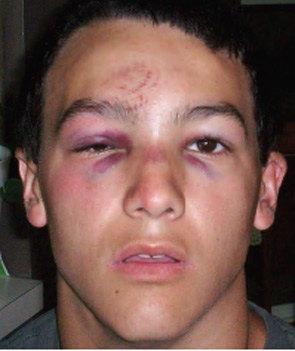
A 14-year-old boy sustained blunt trauma to the forehead from a foul-tipped baseball. Significant past medical history consisted of allergic rhinitis treated with over-the-counter cetirizine (Zyrtec). On examination, the patient had right frontal sinus depression with overlying edema. There were no palpable nasal bone or orbital rim abnormalities. Baseball threads were seen on the overlying skin as well as ecchymosis on the nasal dorsum and under both eyes.

Pages: 1 2 | Multi-Page

A Clinical Challenge: Nasal valve compromise can be a dicey problem, panelists say

February 7, 2011

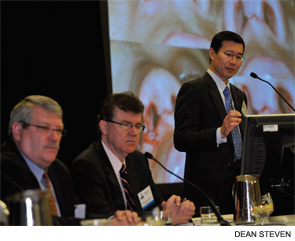
Problems with the nasal valve that lead to difficulty with breathing can be tricky, in terms of both diagnosis and treatment, said a group of experts here at the Triological Society’s Combined Sections Meeting on Jan. 28.

Pages: 1 2 3 | Multi-Page

Another Option for Allergic Rhinitis?: Study examines long-term safety, efficacy of RF turbinoplasty

January 10, 2011

When patients with allergic rhinitis don’t respond to medical therapy, an otolaryngologist’s arsenal of treatment includes surgical options. Among these is radiofrequency (RF) turbinate reduction, also known as RF turbinate ablation or turbinoplasty, an office procedure that advocates say is cost-effective and minimally invasive, with fewer complications than other surgical remedies. Some otolaryngologists, however, are still hesitant to use this relatively new therapy.

Pages: 1 2 3 | Multi-Page

Lingering Issues: Challenges remain in repairing CSF leaks

November 1, 2010

Once the province of neurosurgeons, cerebrospinal fluid (CSF) leak repair is now handled mostly by otolaryngologists. This change has occurred over the past couple of decades, during which time the evolution of endoscopic tools and techniques has made possible extracranial rather than intracranial repair. The success rate for repairing these leaks from below has reached about 90 percent, particularly for small leaks.

Pages: 1 2 3 4 | Multi-Page

Old Problem, New Focus: Otolaryngologists tailor allergy treatments to geriatric patients

October 18, 2010

Allergic rhinitis among the elderly poses a particularly difficult diagnostic challenge for the otolaryngologist. As people age, they undergo immunosenescence. The thymus, which produces T cells against new invaders, atrophies markedly after adolescence, and this decline results in a less robust immune response to bacteria, viruses and presumably allergens (J Pathol. 2007;211(2):144-156). Consequently, physicians have assumed that allergies should decline as people age.

Pages: 1 2 3 4 | Multi-Page

New Study Presents Education Opportunity: Nasal zinc side effects spark discussions about alternative treatments

October 8, 2010

Arecent study in Archives of Otolaryngology-Head and Neck Surgery on the potential side effects of nasal zinc therapies is the newest staging ground in the debate over how otolaryngologists can advise patients on the benefits of homeopathic treatments in the context of the common cold.

Pages: 1 2 3 | Multi-Page

A Patient Experiment

May 2, 2010

Berrylin J. Ferguson, MD, FACS, FAAOA, associate professor of otolaryngology and director of the Division of Sino-Nasal Disorders and Allergy at the University of Pittsburgh School of Medicine in Pittsburgh, Pa., uses the following form to help determine which allergy treatments will work best for each patient.

Treating Allergic Rhinitis: A Patient Experiment

April 1, 2010

Berrylin J. Ferguson, MD, FACS, FAAOA, associate professor of otolaryngology and director of the Division of Sino-Nasal Disorders and Allergy at the University of Pittsburgh School of Medicine in Pittsburgh, Pa., uses the following form to help determine which allergy treatments will work best for each patient.

  • « Previous Page
  • 1
  • …
  • 22
  • 23
  • 24
  • 25
  • 26
  • …
  • 31
  • Next Page »

The Triological SocietyENTtoday is a publication of The Triological Society.

Polls

Has experience as a patient influenced your professional development or demeanor?

View Results

Loading ... Loading ...
  • Polls Archive

Top Articles for Residents

  • A Resident’s View of AI in Otolaryngology
  • Call for Resident Bowl Questions
  • Resident Pearls: Pediatric Otolaryngologists Share Tips for Safer, Smarter Tonsillectomies
  • A Letter to My Younger Self: Making Deliberate Changes Can Help Improve the Sense of Belonging
  • ENTtoday Welcomes Resident Editorial Board Members
  • Popular this Week
  • Most Popular
  • Most Recent
    • A Case for Endoscopic Surgery: How Personal Experience Influenced Pursuit of a New Skill

    • Office Laryngoscopy Is Not Aerosol Generating When Evaluated by Optical Particle Sizer

    • Some Laryngopharyngeal Reflux Resists PPI Treatment

    • Empty Nose Syndrome: Physiological, Psychological, or Perhaps a Little of Both?

    • Rewriting the Rules of Rhinosinusitis

    • The Dramatic Rise in Tongue Tie and Lip Tie Treatment

    • Rating Laryngopharyngeal Reflux Severity: How Do Two Common Instruments Compare?

    • Is Middle Ear Pressure Affected by Continuous Positive Airway Pressure Use?

    • Otolaryngologists Are Still Debating the Effectiveness of Tongue Tie Treatment

    • Keeping Watch for Skin Cancers on the Head and Neck

    • Why So Loud? Rethinking the Volume of Our Everyday Experiences
    • How Audiologists and Researchers Are Shaping Military Hearing Health Practices
    • A Case for Endoscopic Surgery: How Personal Experience Influenced Pursuit of a New Skill
    • The Path to Department Chair: Arriving and Thriving
    • Rewriting the Rules of Rhinosinusitis

Follow Us

  • Contact Us
  • About Us
  • Advertise
  • The Triological Society
  • The Laryngoscope
  • Laryngoscope Investigative Otolaryngology
  • Privacy Policy
  • Terms of Use
  • Cookies

Wiley

Copyright © 2026 by John Wiley & Sons, Inc. All rights reserved, including rights for text and data mining and training of artificial technologies or similar technologies. ISSN 1559-4939