The large, roadside billboards advertised robotic surgery in bright, bold colors, something that struck David Eibling, MD, professor of otolaryngology at the University of Pittsburgh, as “fundamentally wrong.” Hospitals and physicians “should not be offering robotic surgery as a draw for patients,” said Dr. Eibling, who noticed the billboards while traveling through Florida earlier this year, “but rather as a potential tool to benefit the care of the patient.”
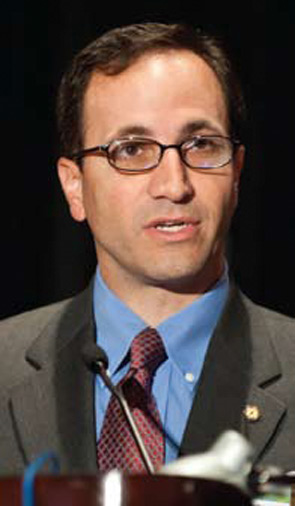
New Tool Could Aid Decisions on Elective Neck Dissection: Fast polymerase chain reaction detects sentinel lymph node positivity
Quantitative real-time polymerase chain reaction (Q-PCR) can be a valuable tool in the operating room to determine whether head and neck cancer patients should go on to elective neck dissection, researchers said here on April 29 at the Annual Meeting of the Triological Society, held as part of the Combined Otolaryngology Spring Meetings.

Targeting Headaches: Trigger release surgery an option for patients with chronic migraine
Surgically releasing specific “trigger sites” may provide long-term relief for some sufferers of chronic migraine. According to a recent study published in Plastic and Reconstructive Surgery, 88 percent of patients who underwent surgical deactivation of targeted trigger sites reported at least a 50 percent reduction in the frequency, severity and duration of their migraine headaches five years later.
A Look at Transoral Robotic Surgery with Synchronous Neck Dissection
What is the incidence of pharyngocutaneous fistula associated with transoral robotic oropharyngectomy with concurrent neck dissection, and how can pharyngocutaneous fistula be prevented and treated? Background: Transoral resection is emerging as […]

Treatment Options: Study reports neck dissection effective in patients with residual disease
Patients who had residual neck disease after treatment for a primary head and neck squamous carcinoma and then underwent neck dissection had comparable survival rates to those who had their disease resolved after their initial chemotherapy and radiation treatment, according to a retrospective analysis from researchers at the University of Louisville in Kentucky presented here Jan. 27.
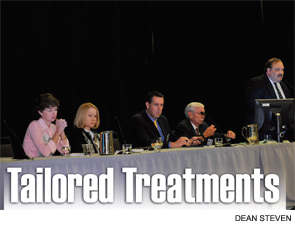
Tailored Treatments: The right approach to vocal fold paralysis depends on the patient, panelists say
Otolaryngologists treating vocal fold paralysis have many options from which to choose, but the best choice depends on the wants and needs of the patient, a panel of experts said here at the Triological Society’s Combined Sections Meeting on Jan. 28.
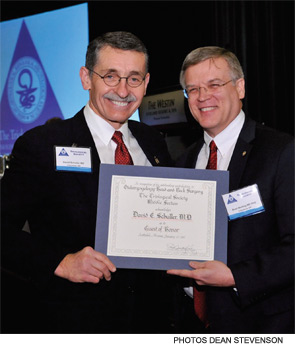
Research Overhaul: Changes to cancer research organizations on the horizon, expert says
The system of clinical cancer research, including that of head and neck cancer, is in need of an overhaul, but steps are being taken that might lead to more efficient work and will hopefully mean more medical breakthroughs, said David Schuller, MD, the chair in cancer research at the Ohio State University College of Medicine in Columbus, at the Triological Society’s Combined Sections Meeting, held here on Jan. 27.
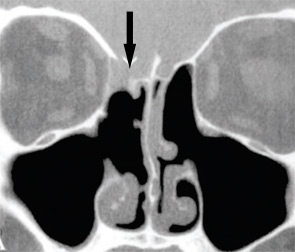
Lingering Issues: Challenges remain in repairing CSF leaks
Once the province of neurosurgeons, cerebrospinal fluid (CSF) leak repair is now handled mostly by otolaryngologists. This change has occurred over the past couple of decades, during which time the evolution of endoscopic tools and techniques has made possible extracranial rather than intracranial repair. The success rate for repairing these leaks from below has reached about 90 percent, particularly for small leaks.

Product Watch
Each month, Product Watch offers readers the latest information on new and innovative products for otolaryngologists-head and neck surgeons.
Considering Tonsillectomy? Factor in Evidence, Clinical Judgment, Patient Preference
SAN DIEGO-Weighing whether or not to perform tonsillectomy boils down to a balance between benefit and harm, declared Richard Rosenfeld, MD, MPH, at the lively and well-attended miniseminar on evidence-based tonsillectomy at the American Academy of Otolaryngology-Head and Neck Surgery annual meeting here.