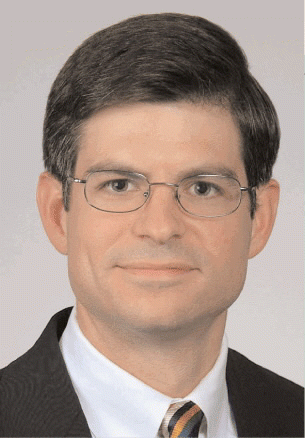
Wayne F. Larrabee, Jr., MD, Clinical Professor of Otolaryngology-Head and Neck Surgery at the University of Washington in Seattle, and director of the Larrabee Center for Facial Plastic Surgery, which he opened in 1990, possesses that keen eye.


PHOENIX-When faced with sticky ethical issues-such as a colleague who periodically shows up to work smelling of alcohol, or getting complaints from staff about inappropriate behavior from another doctor-what should be done?


Although eustachian tuboplasty is in its infancy and specific criteria and indications for its use have not yet been established, researchers hope that it might provide a viable alternative to using pressure equalization tubes or tympanostomy for chronic eustachian tube dysfunction.

PHOENIX-Mentors seem to be a dying breed, but they shouldn’t be. Indeed, the importance of mentors was stressed in the Triological Society’s Presidential Address by Myles L. Pensak, MD, at the recent Combined Otolaryngological Spring Meeting here.

Implementing electronic health records (EHRs) for all 633,000 physicians and 5708 hospitals in the United States is a daunting task, and one that is being nudged forward by Team Obama’s $19 billion stimulus plan earmarked to help health care providers to switch to EHRs.

PHOENIX-With the election of President Barack Obama and with lawmakers in Washington poised to overhaul the health care system, with patients’ faith in their doctors faltering, and with health costs continuing to rise and quality becoming ever more questionable, Gerald B. Healy, MD, took the lectern for his keynote address here as if he were taking the helm of a ship at risk of being capsized by stormy seas.

PHOENIX-Doctors have a duty to encourage the hospitals and clinics they work in to go green because helping create a cleaner environment will improve the health of the very patients they are supposed to be caring for.

Otolaryngologists-head and neck surgeons have suggested that performing tonsillectomy among patients who present with neck metastases from an occult primary tumor can identify a high percentage of primary tumors-an even better success rate in locating the malignancies than can be obtained with deep tonsil biopsy.

As spring spreads across the country, the change in temperature and slanting of the sun promises that summer is soon on its heels. For many primary care physicians and otolaryngologists, particularly those living in northern climes, that means an upsurge in people presenting with acute otitis externa, a condition that is estimated to afflict from 1 in 100 to 1 in 250 persons in the general population.