Experts agree that continuous positive airway pressure (CPAP) is the gold standard for management of obstructive sleep apnea.

Experts agree that continuous positive airway pressure (CPAP) is the gold standard for management of obstructive sleep apnea.

Non-acidic reflux is a major cause of laryngeal inflammation, and patients with this disorder present with a constellation of symptoms that differ from classic gastroesophageal reflux (GERD).
Physicians can successfully perform ultrasound-guided (US) fine-needle aspiration biopsy (FNAB) of thyroid nodules in the office instead of referring patients to a hospital-based radiologist for the procedure, according to new data presented at the annual meeting of the American Academy of Otolaryngology-Head and Neck Surgery.

The targeted therapies erlotinib and cetuximab, in combination with standard chemotherapy regimens, are well tolerated and have very encouraging activity in recurrent/metastatic head and neck squamous cell carcinoma, according to two presentations at the American Society of Clinical Oncology (ASCO) 2007 Annual Meeting in Chicago.

Stereotactic radiotherapy is increasingly gaining favor as an attractive alternative to conventional surgery of the skull base and head and neck.
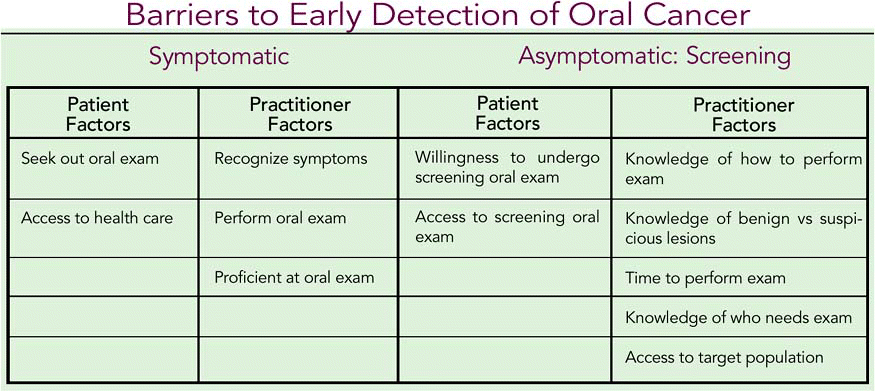
Oral screening exams are inexpensive, are easy to perform, and have the potential to reduce the annual global mortality for oral cancer by tens of thousands of people.

Vertigo is a complaint that often causes patients to seek a consultation with an otolaryngologist.

Part 2 of this article will discuss treatment options for skull base tumors.

Otolaryngologist Martin L. Hopp, MD, PhD, of Cedars-Sinai Hospital in Los Angeles, believes that in-office computed tomography (CT) scanning is the trifecta of care for otolaryngologists and their patients.