With the all-consuming grind of seeing patients, it is often difficult for head and neck surgeons to sit back and ask some important questions: Just how well are we doing our jobs?


When a 30-year-old woman from Colombia who had had severe stenosis from airway tuberculosis was referred to the University College London Centre for Stem Cells and Regenerative Medicine, there were more questions than answers.

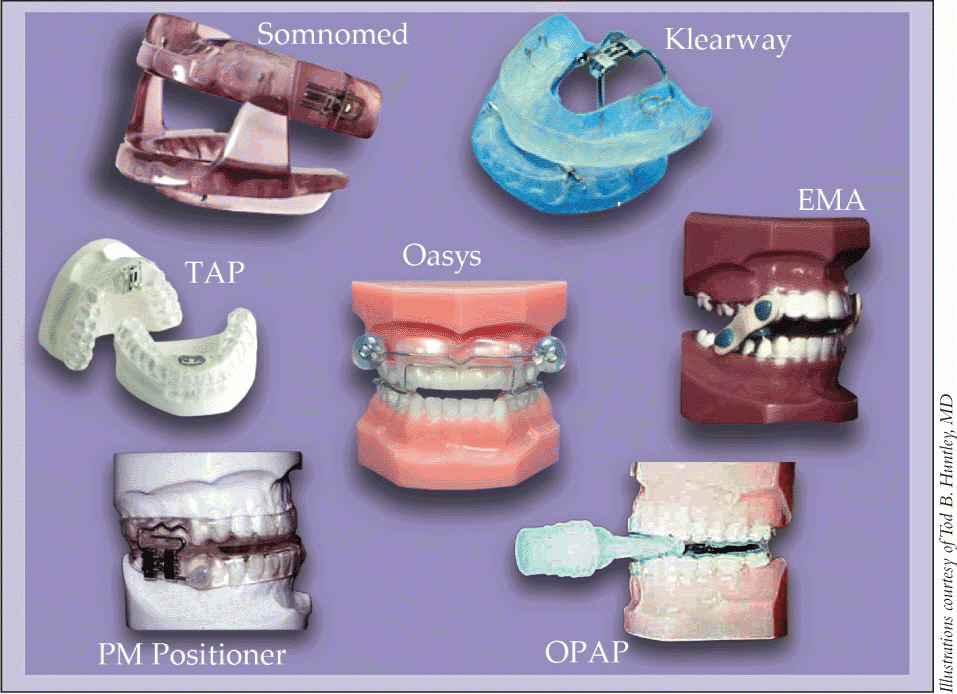
SAN DIEGO-For patients who undergo surgery for obstructive sleep apnea, failure of surgery to achieve success presents a number of challenges to otolaryngologists. First and foremost is the challenge of correctly assessing the outcome of surgery followed by the need to choose additional therapy tailored to the particular needs of each patient.


Injection laryngoplasty (IL) performed in the office with the patient awake yields similar results as when it is performed with the patient asleep, researchers have found in a case-control study.

The otolaryngologists and pediatric surgeons who watched President Obama’s July 22 press conference must have been astonished to hear themselves vilified by the Health Care Reformer-in-Chief.

PHOENIX-Medical students who use computer-assisted learning (CAL) when learning epistaxis management have superior performance over their counterparts who simply go by the book.

Part 1 of 2 articles
PHOENIX-Cysts on vocal folds can be tricky lesions to tackle-more challenging than many otolargyngologists might think, a panel of experts said here.

Part 2 of 2 articles
PHILADELPHIA-Surgeons are faced with many options for approaching diseases of the sinus; the right approach is not always clear-cut. Five experts reviewed several approaches at Rhinology World held here recently, with some favoring a more aggressive approach, some preferring to be less aggressive, and others highlighting new technology.

President Obama has made an astonishing discovery: We’re not producing enough primary care doctors, he recently told Congress. Although this may be news to the president’s minions, physician groups, legislators, insurers, and patients are all well aware of the dearth of generalists.