• Home
  • Practice Focus
    • Facial Plastic/Reconstructive
    • Head and Neck
    • Laryngology
    • Otology/Neurotology
    • Pediatric
    • Rhinology
    • Sleep Medicine
    • How I Do It
    • TRIO Best Practices
  • Business of Medicine
    • Health Policy
    • Legal Matters
    • Practice Management
    • Tech Talk
    • AI
  • Literature Reviews
    • Facial Plastic/Reconstructive
    • Head and Neck
    • Laryngology
    • Otology/Neurotology
    • Pediatric
    • Rhinology
    • Sleep Medicine
  • Career
    • Medical Education
    • Professional Development
    • Resident Focus
  • ENT Perspectives
    • ENT Expressions
    • Everyday Ethics
    • From TRIO
    • The Great Debate
    • Letter From the Editor
    • Rx: Wellness
    • The Voice
    • Viewpoint
  • TRIO Resources
    • Triological Society
    • The Laryngoscope
    • Laryngoscope Investigative Otolaryngology
    • TRIO Combined Sections Meetings
    • COSM
    • Related Otolaryngology Events
  • Search

Practice Focus

Falling on Deaf Ears: Hearing loss in older adults may be an undertreated condition

January 10, 2011

Most people will experience some degree of hearing loss as they age. Statistics from the National Institute on Deafness and Other Communication Disorders at the National institutes of Health (NIH) indicate that 30 percent of adults ages 65 to 74, and 47 percent of adults 75 years or older, have hearing loss.
Pages: 1 2 3 4 5 | Multi-Page

Another Option for Allergic Rhinitis?: Study examines long-term safety, efficacy of RF turbinoplasty

January 10, 2011

When patients with allergic rhinitis don’t respond to medical therapy, an otolaryngologist’s arsenal of treatment includes surgical options. Among these is radiofrequency (RF) turbinate reduction, also known as RF turbinate ablation or turbinoplasty, an office procedure that advocates say is cost-effective and minimally invasive, with fewer complications than other surgical remedies. Some otolaryngologists, however, are still hesitant to use this relatively new therapy.

Pages: 1 2 3 | Multi-Page

A New Direction for Sleep: New OSA guidelines fuel another evidence-based medicine debate

December 1, 2010

Recent publication of practice parameters for surgery in adults with obstructive sleep apnea (OSA) by the American Academy of Sleep Medicine (AASM) has set off another round of debate on the need for otolaryngologists to get involved in generating their own guidelines. Although otolaryngologists have yet to agree on whether or not the time is right for guidelines on surgical treatment for sleep apnea, consensus can be claimed regarding the need perceived by the American Academy of Otolaryngology–Head and Neck Surgery (AAO-HNS) to get on the evidence-based bandwagon.

Pages: 1 2 3 4 | Multi-Page

A Coping Mechanism: Child life specialists can ease hospital stays for pediatric patients

December 1, 2010

Seven-year-old Michael is scheduled to have a hemangioma removed from his face at the Arkansas Children’s Hospital (ACH) Ambulatory Surgery Center in Little Rock. The morning of surgery, he and his mother meet with child life specialists Cassandra C. James, MS, CCLS, and Camille Dante, MS, CCLS, who show him pictures of the operating room. They let him play with an anesthesia mask and a pulse oximeter, and talk about what to expect when he goes to sleep.

Pages: 1 2 3 4 | Multi-Page

Lingering Issues: Challenges remain in repairing CSF leaks

November 1, 2010

Once the province of neurosurgeons, cerebrospinal fluid (CSF) leak repair is now handled mostly by otolaryngologists. This change has occurred over the past couple of decades, during which time the evolution of endoscopic tools and techniques has made possible extracranial rather than intracranial repair. The success rate for repairing these leaks from below has reached about 90 percent, particularly for small leaks.

Pages: 1 2 3 4 | Multi-Page

Compliance Made Easy: High-tech systems remind patients to take their meds

November 1, 2010

Neil Chheda, MD, assistant professor of otolaryngology at the University of Florida in Gainesville, realized a few years ago that nearly half of his patients on proton pump inhibitors were taking them incorrectly.

Pages: 1 2 3 4 | Multi-Page

Old Problem, New Focus: Otolaryngologists tailor allergy treatments to geriatric patients

October 18, 2010

Allergic rhinitis among the elderly poses a particularly difficult diagnostic challenge for the otolaryngologist. As people age, they undergo immunosenescence. The thymus, which produces T cells against new invaders, atrophies markedly after adolescence, and this decline results in a less robust immune response to bacteria, viruses and presumably allergens (J Pathol. 2007;211(2):144-156). Consequently, physicians have assumed that allergies should decline as people age.

Pages: 1 2 3 4 | Multi-Page

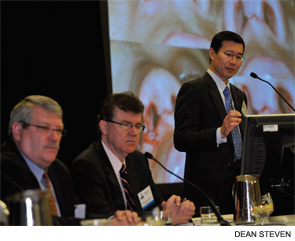
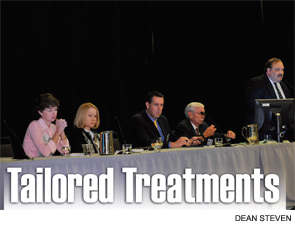
A Tailored Approach to Dizziness: Take extra caution and care in the elderly, panelists say

October 8, 2010

Dizziness is a particular danger among the elderly, but extra care taken by physicians can help ease their problems and help keep older patients functioning, panelists said at the 2010 Annual Meeting of the American Academy of Otolaryngology-Head and Neck Surgery, held here Sept. 26-29.

Pages: 1 2 3 | Multi-Page

The End of the Food Challenge Test?: Researchers seek new ways of diagnosing food allergy

October 8, 2010

New ways of diagnosing food allergies are on the horizon, with allergy experts hoping that it might be possible one day for many patients to avoid the traditional food challenge test (FCT).

Pages: 1 2 3 | Multi-Page

Room for Improvement: Pediatric ambulatory centers could benefit from guidelines, panelists say

October 8, 2010

Pediatric ambulatory surgery centers are fast-paced, high-volume places with many of the ingredients that can contribute to safety concerns, a patient safety expert from Children’s National Medical Center (CNMC) said at the 2010 Annual Meeting of the American Academy of Otolaryngology-Head and Neck Surgery (AAO-HNS), held here Sept. 26-29.

Pages: 1 2 3 | Multi-Page
  • « Previous Page
  • 1
  • …
  • 134
  • 135
  • 136
  • 137
  • 138
  • …
  • 168
  • Next Page »

The Triological SocietyENTtoday is a publication of The Triological Society.

Polls

Do you use TXA to reduce intraoperative and post-op bleeding?

View Results

Loading ... Loading ...
  • Polls Archive

Top Articles for Residents

  • A Resident’s View of AI in Otolaryngology
  • Call for Resident Bowl Questions
  • Resident Pearls: Pediatric Otolaryngologists Share Tips for Safer, Smarter Tonsillectomies
  • A Letter to My Younger Self: Making Deliberate Changes Can Help Improve the Sense of Belonging
  • ENTtoday Welcomes Resident Editorial Board Members
  • Popular this Week
  • Most Popular
  • Most Recent
    • Office Laryngoscopy Is Not Aerosol Generating When Evaluated by Optical Particle Sizer

    • Empty Nose Syndrome: Physiological, Psychological, or Perhaps a Little of Both?

    • The Dramatic Rise in Tongue Tie and Lip Tie Treatment

    • History of the Cochlear Implant

    • How To: Carolyn’s Window Approach to Unilateral Frontal Sinus Surgery

    • The Dramatic Rise in Tongue Tie and Lip Tie Treatment

    • Rating Laryngopharyngeal Reflux Severity: How Do Two Common Instruments Compare?

    • Is Middle Ear Pressure Affected by Continuous Positive Airway Pressure Use?

    • Otolaryngologists Are Still Debating the Effectiveness of Tongue Tie Treatment

    • Keeping Watch for Skin Cancers on the Head and Neck

    • Growing Use of Tranexamic Acid in Otolaryngology
    • Reconnect, Recharge, Relax, and Choose Joy This Season
    • A Resident’s View of AI in Otolaryngology
    • Faculty Mentorship of Academic Surgeons
    • CMS’ New Rule Aims to Streamline the Prior Authorization Process

Follow Us

  • Contact Us
  • About Us
  • Advertise
  • The Triological Society
  • The Laryngoscope
  • Laryngoscope Investigative Otolaryngology
  • Privacy Policy
  • Terms of Use
  • Cookies

Wiley

Copyright © 2025 by John Wiley & Sons, Inc. All rights reserved, including rights for text and data mining and training of artificial technologies or similar technologies. ISSN 1559-4939