It is a common scenario in an otolaryngology office: A patient with nasal congestion and a sinus headache wants an antibiotic to eradicate the problem-and quickly.


A meta-analysis of the literature suggests that oncologic and voice quality results are similar if patients with early-stage glottic cancer are treated with either transoral laser surgery or external beam radiotherapy.

It has been suggested that since its introduction in 1992, the term evidence-based medicine (EBM) has reached almost iconic status within the medical lexicon.


At first glance, the Otolaryngology Surgery Simulation Center at Montefiore Medical Center in New York resembles a traditional temporal bone dissection lab.

With the advent of fiberoptic and distal-chip scopes and other innovations, otolaryngologists are now able to perform many laryngeal diagnostic and therapeutic procedures on awake patients in the in-office setting rather than on fully anesthetized individuals in the operating room.
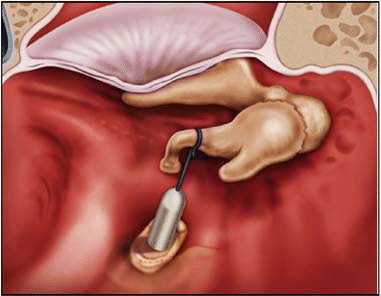
Be careful not to be too quick to say that a patient’s problems are due to canal dehiscence.
Intraoperative volume CT is showing promise as a tool to help with complex endoscopic sinonasal and skull base procedures.