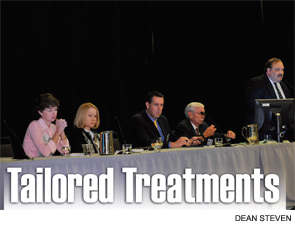
A 29-year-old banker with a mild upper respiratory infection that’s been lingering for a week arrives at the otolaryngologist’s office with tinnitus. He had flown six days earlier and lifted at the gym five days earlier.


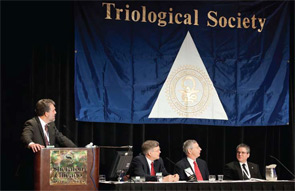
Quantitative real-time polymerase chain reaction (Q-PCR) can be a valuable tool in the operating room to determine whether head and neck cancer patients should go on to elective neck dissection, researchers said here on April 29 at the Annual Meeting of the Triological Society, held as part of the Combined Otolaryngology Spring Meetings.
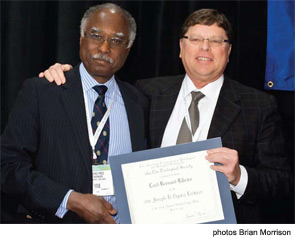

Neurotrophic factors can be introduced using stem cells and, along with the plant alkaloid vincristine, can be used to selectively reinnervate the larynx in rat models, a researcher from Indiana University said here on April 29 at the Annual Meeting of the Triological Society, held as part of the Combined Otolaryngology Spring Meetings.
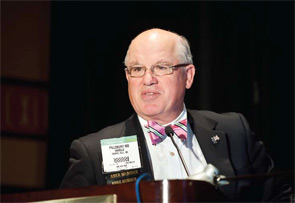
Patients who had residual neck disease after treatment for a primary head and neck squamous carcinoma and then underwent neck dissection had comparable survival rates to those who had their disease resolved after their initial chemotherapy and radiation treatment, according to a retrospective analysis from researchers at the University of Louisville in Kentucky presented here Jan. 27.

Problems with the nasal valve that lead to difficulty with breathing can be tricky, in terms of both diagnosis and treatment, said a group of experts here at the Triological Society’s Combined Sections Meeting on Jan. 28.

Otolaryngologists treating vocal fold paralysis have many options from which to choose, but the best choice depends on the wants and needs of the patient, a panel of experts said here at the Triological Society’s Combined Sections Meeting on Jan. 28.

The system of clinical cancer research, including that of head and neck cancer, is in need of an overhaul, but steps are being taken that might lead to more efficient work and will hopefully mean more medical breakthroughs, said David Schuller, MD, the chair in cancer research at the Ohio State University College of Medicine in Columbus, at the Triological Society’s Combined Sections Meeting, held here on Jan. 27.

The debate over soaring health care costs fails to properly acknowledge the benefits that have stemmed from improved medical technology and expanded medical knowledge, said Triological Society President Gerald Berke, MD, in an address at the society’s Combined Sections Meeting, held here on Jan. 27.

The newly adopted clinical practice guidelines (CPG) on hoarseness—and concerns that portions are overly simplistic and could harm care—took center stage here in a panel discussion at the Annual Meeting of the American Society of Pediatric Otolaryngology, part of the Combined Otolaryngology Spring Meetings held here April 28-May 2.

Dr. Roberts used numbers to illustrate his point during a presentation at the Annual Meeting of the American Broncho-Esophagological Association, part of the Combined Otolaryngological Spring Meetings held here April 28-May 2.