The $1.1 billion earmarked for comparative effectiveness research in the economic stimulus bill passed on February 13 could be a sound investment in improving health care’s efficiency, cutting costs, and improving patient outcomes.
Vocal Fold Paresis: A Well-Recognized Condition of Ambiguous Significance
In this age of increasing reliance on diagnostic technologies to better see pathologies of the body, there is a confounding problem of seeing too much, with too little understanding of what one is seeing and whether what one sees poses a problem.
Facing Conflicts: The Battle between Medicine and Industry

Marketing Challenges and Opportunities in Otolaryngology: Unified Marketing Plan Yields Increase in Patient Load

What Is the Best Technique for Diagnosing Esophageal Diverticulum?

Allergy Research Gets High Evidence-Based Medicine Rankings
Several treatments for allergy-related disease have high-quality evidence to support them, according to panelists at a seminar in Chicago at the annual meeting of the American Academy of Otolaryngology-Head and Neck Surgery (AAO-HNS), which focused on evidence-based medicine as the model applies to allergy.

Should Surgery Be First-Line Treatment for Head and Neck Cancer?

Carbon Dioxide Laser Scores Well on Patient Tolerance in the Office
A flexible carbon dioxide laser caused patients less pain and burning than the more traditionally used pulsed-dye laser in office-based treatment of benign diseases of the larynx, researchers have reported.
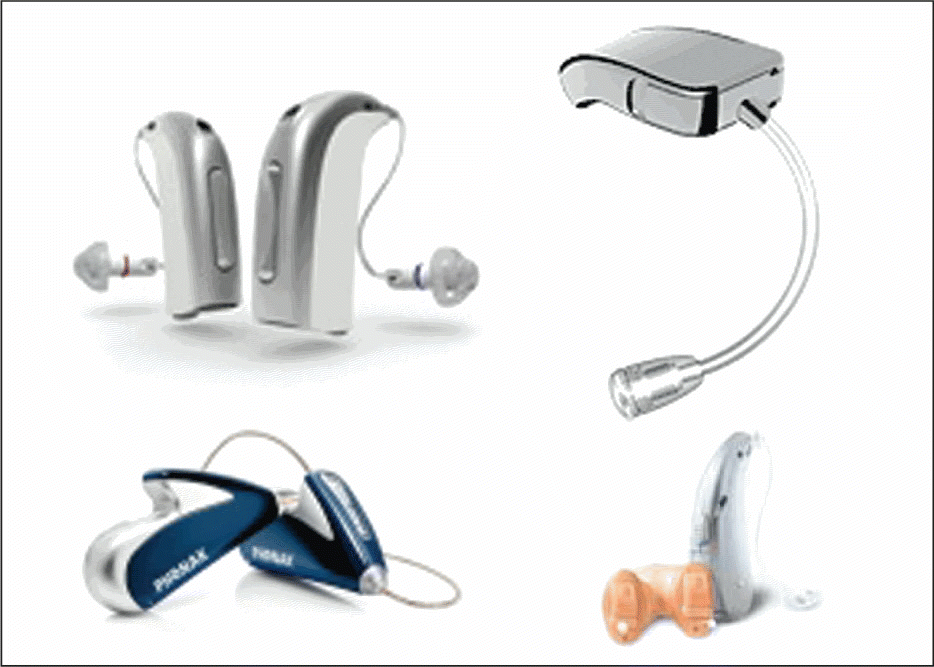
The Latest in Hearing Aid Technology

Losing Sleep over Residents’ Work Week Restrictions
Medical residents used to work shifts so long that fatigue blurred their vision, clouded their judgment, and overall put them on the brink of mental and physical exhaustion.
- « Previous Page
- 1
- …
- 308
- 309
- 310
- 311
- 312
- …
- 346
- Next Page »