Ronald A. Simon, MD, often illustrates a major food allergy misconception by showing a “Peanuts” cartoon of a bleary-eyed Snoopy lying atop his doghouse. “I think I’m allergic to morning,” Snoopy says.

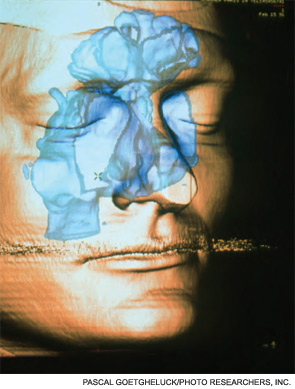

Patients who had residual neck disease after treatment for a primary head and neck squamous carcinoma and then underwent neck dissection had comparable survival rates to those who had their disease resolved after their initial chemotherapy and radiation treatment, according to a retrospective analysis from researchers at the University of Louisville in Kentucky presented here Jan. 27.
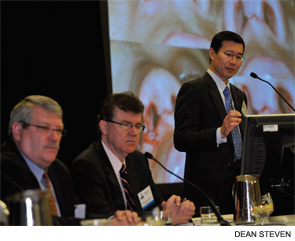
Problems with the nasal valve that lead to difficulty with breathing can be tricky, in terms of both diagnosis and treatment, said a group of experts here at the Triological Society’s Combined Sections Meeting on Jan. 28.
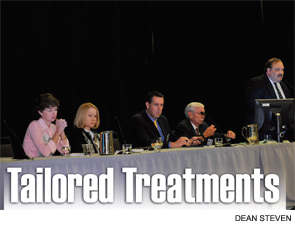
Otolaryngologists treating vocal fold paralysis have many options from which to choose, but the best choice depends on the wants and needs of the patient, a panel of experts said here at the Triological Society’s Combined Sections Meeting on Jan. 28.
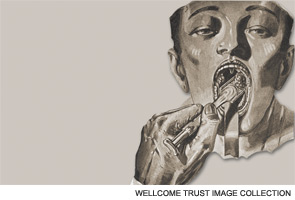
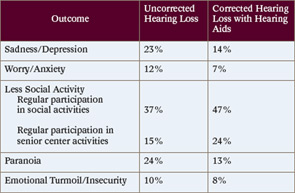
Most people will experience some degree of hearing loss as they age. Statistics from the National Institute on Deafness and Other Communication Disorders at the National institutes of Health (NIH) indicate that 30 percent of adults ages 65 to 74, and 47 percent of adults 75 years or older, have hearing loss.


In this economy, investing in advertising as a way to increase profits is an attractive idea. But, before you reach out to a marketing firm, let me tell you about a recent scenario that happened to one of my physician clients.
As America grows and evolves, its face necessarily changes. Our country rests solidly on the idea that life, liberty and the pursuit of happiness should be available to all. Our collective understanding that access to health care and healthy living are essential to that ideal happiness continues to mature. But while the population becomes more diverse and blended, cultural disparities in health care not only persist, they do not appear to be diminishing. Collectively, African-Americans, Hispanic Americans and Native Americans comprise over one-quarter of our population. Yet, in the year 2000, they made up less than 10 percent of the physician workforce. These numbers dwindle even more when we consider surgical subspecialties.